Paralaxita Entomology is entirely self-hosted with personal hardware all contained within my bedroom. This setup was chosen as it allows the project to be self-contained and not under the technical control and limitations established by 3rd-party closed-source hosting providers. This setup also allows complete creative control, so its focus and scope can be fully realized free from censorship or arbitrary technical or creative restrictions.
Being a self-hosted project also means that its activity can't be tracked or used for analytics by said hosting providers. While it is a public website, it is private in the sense that it does not track those who visit it, nor is it being actively monitored by a private corporation.
Since the site is a small, independent, and not-for-profit project, hosting it on a homemade server is much more cost-effective and uses significantly less technical overhead. The only reoccurring server-related finances are the bare essentials, such as the domain name registration, static IP fees from the ISP, and the minimal amount of electricity the server uses. The cost of these services are not of significant value, making the site economical to host and maintain.
The server hardware was recently upgraded to account for increased personal needs and the consolidation of space and resources. This website was originally hosted on a headless Raspberry Pi 2 B+ running RPi OS (Debian), which while small and lightweight, was very limiting in terms of performance due to its older hardware and software limitations. The Raspberry Pi boots off an SD card, which are not only slow when compared to other solid-state drives or even hard disks, they are also not designed for the constant reading and writing tasks of an operating system. This results in them wearing out prematurely and generally being less stable, and stability is something that is integral to a server.
The Raspberry Pi also was inconvenient in terms of software maintenance and keeping it up-to-date. Unlike most other operating systems, RPi OS can not update its core packages by itself and must be upgraded manually by formatting the SD card and writing a new image of the updated operating system to it. This entails starting from over from scratch and spending hours restoring backups and reinstalling software.
My network infrastructure also handled another headless server system hosting a Jellyfin media server and a self-hosted instance of the SearXNG search engine. This hardware, a 12-year-old Acer desktop, was aging and power-hungry. The hardware was limited by its hard disk drive which was beginning to fail, and it could not keep up with the other demands I needed from it. It ran a more traditional operating system, Xubuntu, which was easier for maintenance, but it added unnecessary overhead.
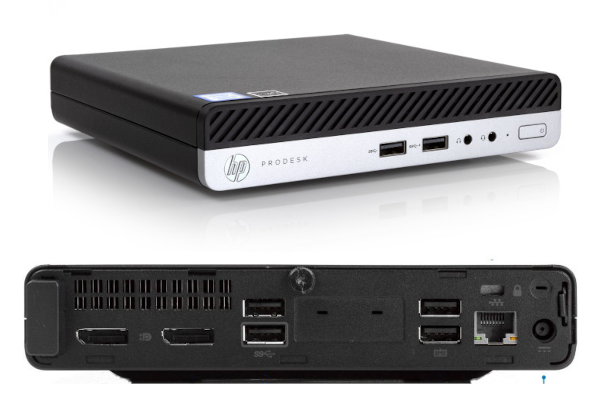
For the purposes of consolidation, a new system, an HP ProDesk 400 G4 was obtained to be used as the server for the public-facing Paralaxita Entomology, my media server, SearXNG instance, and other essentials needed in my private home network. The system has modernized hardware, such as an SSD, increased memory and a more capable processor. It's running Fedora Server, a purpose-built OS which provides only the bare essentials required for hosting on a headless setup. Another important factor was that this hardware takes up much less space than the previous machines and uses significantly less electricity.